Money & payments
A banknote keeps travelling after you have paid
For the customer, paying in cash is a brief transaction. Behind the till lies a chain of transport, counting and checking that ensures usable notes can be issued again.

A note that ends up with a shopkeeper does not necessarily find its next owner straight away as change. Businesses deposit notes or have them collected by a cash-in-transit company. De Nederlandsche Bank describes how those notes are then checked at a cash centre: are they genuine, clean and sufficiently undamaged?
Approved notes can go back to the cash machines. Others go to DNB for further checks. Very dirty or damaged notes are rejected and shredded. New notes top up the circulation. So the money in a cash machine has not necessarily come straight from the printing works.
Genuine is not the same as usable
The European Central Bank distinguishes authenticity from fitness for further circulation. After all, a genuine note can be worn out. Banks and other professional cash handlers may only reissue notes once the required checks have been carried out.
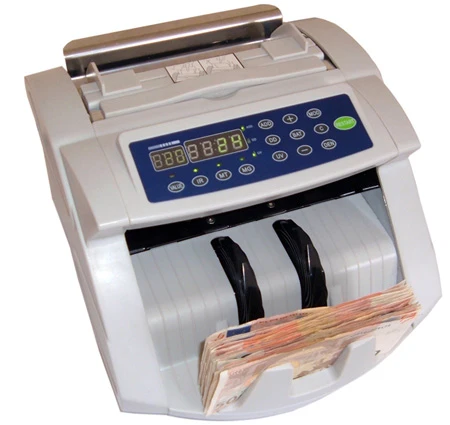
For this, tested types of processing machines or trained staff are used. For issuing through cash machines, machine checks apply. The ECB describes these rules as part of safeguarding confidence in money: the next recipient should not have to depend on what a previous owner still found acceptable.
The money keeps its value; handling it takes work
The counter shows an amount; behind the counting are people, machines and transport. Those tasks explain why handling cash involves costs. In themselves, they do not answer the question of what fee a shopkeeper or bank ought to charge for it.
The ECB describes reissuing by cash handlers as a way of organising the cash supply more efficiently. Not every usable note has to pass through a national central bank each time. DNB’s description of Dutch practice and the European checking rules thus show two sides of the same chain: move money where necessary, check it before it goes back out.
A banknote is therefore both a means of payment and an everyday object that wears out. Its face value is printed on it. The work that keeps it usable and reliable in circulation is something you usually don’t see at the checkout.